Rechercher dans ce blog

Saturday, July 31, 2021

Families are at war over a wedding tradition India banned decades ago - CNN

Initially, police had no reason to view the 24-year-old student's death on June 21 as suspicious, until her family made a complaint under the country's "dowry death" law.
The law allows charges to be brought against people for causing the death or suicide of a woman within the first seven years of her marriage in which the family had promised a dowry -- gifts given to a groom's family when a couple marry.
Dowries have been banned in India for more than 60 years, but the practice persists -- and not only in rural and more traditional parts of the country.
Kerala -- where Nair died -- boasts some of the highest literacy rates for both men and women in India, and is generally considered a progressive state -- but it still "exhibits stark and persistent dowry inflation since the 1970s and has the highest average dowry in recent years," according to a World Bank report released in June.

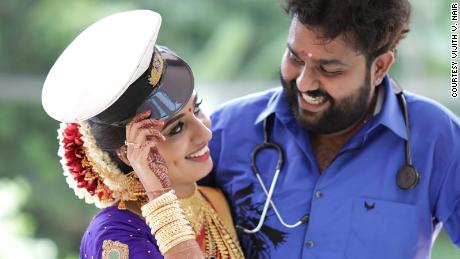
Vismaya Nair at her wedding in May 2020.
Harshita Attaluri, an inspector general of police in Kerala, said investigators have yet to establish whether Nair died by suicide or was murdered.
Police arrested Nair's husband, Kiran Kumar, under India's dowry death law. He remains in custody but hasn't been charged.
Kumar's lawyer, B. A. Aloor, said Kumar did not commit any dowry-related crime.
"There is nothing on record to show that this gentleman either committed a murder or a dowry death," he said.
Traditionally, a dowry referred to gifts in the form of cash or goods that parents gave their daughter to provide her with more financial security in her marriage.
But now experts say families are transferring cash, gold, cars, real estate property or other assets to the groom's family as a condition of the marriage.
And some families are deeply unhappy with the deal.

An illegal practice

India's dowry system dates back in some form for thousands of years, when women who were unable to inherit property under Hindu laws were provided with a dowry registered under her name during marriage.
Over time, the practice became associated with violence against women linked to the coercion of dowry from her family. Crimes included physical abuse and harassment, as well as deaths related to dissatisfaction over the amount of dowry received. So, it was criminalized under the 1961 Dowry Prohibition Act with a fine and prison sentence of at least five years.
But the law was ineffective, say experts, so in the 1980s lawmakers introduced sections into India's penal code allowing authorities to charge men or their family members with a "dowry death." The charge carries a prison sentence of seven years to life.
But despite the tougher penalties, the practice of dowries still remains deeply entrenched in society as an integral part of marriage.
According to the World Bank, a dowry was given in 95% of the 40,000 marriages that took place in rural India between 1960 and 2008.
The information was based on the 2006 Rural Economic and Demographic Survey -- the most recent source of dowry data covering 17 major states.
Recent crime figures suggest dowries are still being paid.
In 2019, the country recorded more than 13,000 complaints over dowries and more than 7,100 dowry deaths, according to the National Crime Records Bureau of India.
Of the 3,516 dowry deaths that were tried in court in 2019, only 35.6% led to a criminal conviction. Experts say it can be difficult for families to prove that harassment over a dowry led to a woman's death.
Thousands of cases are still working their way through courts; at the end of 2019, more than 46,000 cases were still to be tried. Activists say the large number of cases shows the laws in place are highly ineffective, and have been for a long time.
"Legally it is banned, but it is a socially accepted practice," said Sandhya Pillai, a trustee of Sakhi Women's Resource Centre in Kerala. "Nobody feels that it is not OK to give or take dowry, irrespective of the law."

'She loved to dance'

Nair's brother Vijith Nair said his sister was once a "bright, bold, and active girl."
"She was a very active woman, not only was she studying medicine but also she used to be part of the National Cadet Corps and represented the state in national camps," he said, referring to her involvement in the youth wing of the Indian Armed forces.
"She loved to dance, she loved to travel and fly."
That changed after she married, he said.
"She was restricted from using social media, from calling her parents, from flying, all because of this one thing -- this dowry."
Vismaya Nair with her brother, Vijith Nair.
He said her husband, Kumar, didn't seem happy with the car his family gave him. "We gave him a good car, but he didn't stop demanding for a bigger and more expensive car," Nair said.
The police inspector Attaluri said Kumar was embarrassed by the make and model of the car he received and not happy with his wife's dowry, which included an amount of gold.
Nair said his family wanted his sister to be financially secure.
"We gave this much for her -- what I earned working, my father's life savings from 20-plus years of working, we gave it all for her life security," he said. "And only one year passed (after her marriage), and we lost her."
Kumar's lawyer said allegations of a dowry dispute were "false and baseless." CNN has attempted to reach Kumar's family for comment.

An ongoing battle

Nair was not the only woman to die in suspicious circumstances in Kerala in June -- the families of three other women have also filed complaints with police over dowries.
On the same day as Nair's death, 22-year-old Archana died from immolation, according to the complaint lodged with police that only identifies her by one name. Police registered the case under the criminal section of the death of a woman within seven years of marriage.
A day later, 19-year-old Suchitra Tial was found dead in the home she shared with her husband, according a complaint filed at Vallikunnam Police Station. Police say they have not made any arrests and have not ruled out allegations from Tial's family that it was a dowry death. CNN has reached out to Tial's family for comment but has not heard back.
A fourth new bride was also found dead in her home, and the family has complained of dowry harassment, Reuters reported, without naming the woman.
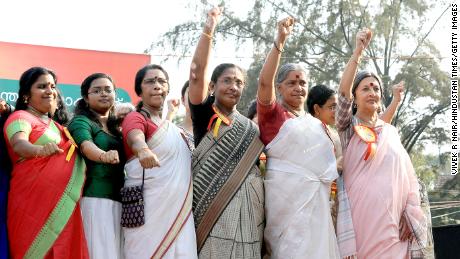
Women gather to participate in the 620-kilometer "Women's Wall" against gender discrimination in Kerala, 2019.
While the fatalities haven't conclusively been classified as dowry deaths, they have sparked widespread shock and anger in Kerala, with many demanding an end to the controversial custom.
"We cannot say that literacy has not contributed to women's empowerment -- lots of progress has been made for women's rights in different social avenues," said Pillai. "At the same time, we have this deep seated patriarchy that we are not able to overcome irrespective of the high rates of literacy."
Kerala police investigated 68 dowry-related deaths, including suicides, between 2016 and May this year, according to police records. The same records show police dealt with more than 15,000 complaints of "cruelty by husband and relatives" during the same period.
Nair's brother said there was no question that a dowry was expected for his sister's marriage.
"If you are a girl who has a good education, and you're from a good family, it doesn't matter," Vijith Nair said. "If you want to get your daughter married, and you don't give dowry, you're not going to find a good, educated man. That's the system in Kerala."

Shame, stigma and silence

Experts say it's hard to clamp down on the controversial custom because it has become intertwined with one's reputation and social standing.
"People fear they will be looked down upon if they don't display wealth in their daughter's marriage," said Pillai.
The custom has also been normalized under the guise of "gift-giving" -- blurring the line between what is traditionally considered a "dowry" and what could be classed as a gift voluntarily given to the groom's family from the bride.
Shahida Kamal, a member of the Kerala Women's Commission, describes this as a "loophole" in the 1961 Dowry Prohibition Act. She says presents such as gold, land or cars gifted by families don't come under the provision of the act. "Here starts the dilemma of pretending (to be) a wealthy family and (satisfying) the groom's family by any financial means," she said.
Praveena Kodoth, a professor researching gender, migration, and human development at the Center for Development Studies in Kerala, said many women in marriages where dowries are causing disputes don't say anything due to "shame and humiliation."
Nair said his sister had been physically and verbally abused by her husband throughout their marriage. When her family found out, "we brought her back home and never wanted to (send) her back again to her husband's home," he said. Nair said she convinced him not to report the abuse to the police.
She was doing her practical exams at school when her husband found her, apologized and asked her to return to his home, her brother said. She agreed.
"After that, she hid all things from us. We believed that she was OK," Nair said.
He believes his sister did not want to cause any more pain for her family, or bring any burden or shame to them.
Pillai says a sense of guilt is common in women -- especially if the woman's parents are elderly, or struggled to provide a large enough dowry.
Kumar's lawyer says Kumar denies the abuse allegations, adding there was no physical abuse or ill-treatment inflicted by Kumar through the course of the marriage.

Fighting for justice

Pillai says the Sakhi women's center receives hundreds of calls from women seeking help every month, but many women don't speak up.
"We need to continue talking about these topics seriously in society," Pillai said. "That is the only way people will begin to confront them and not forget about the plight of our daughters."
But there are also systemic frameworks that set inherent power imbalances between men and women that need to be addressed, said Kodoth.
For instance, state banks emphasize giving loans to facilitate marriage for women, but don't offer the same loans for grooms, which could encourage families to push their daughters into marriage at an early age.
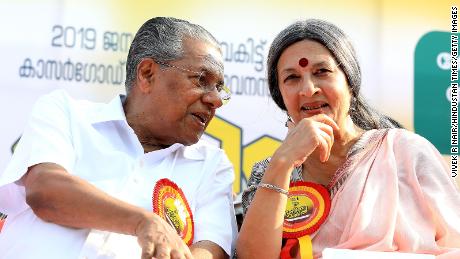
Chief Minister Pinarayi Vijayan with an activist during the "Women's Wall" protests in 2019.
Days after Nair's death, Kerala Chief Minister Pinarayi Vijayan took to Twitter to condemn the practice of dowry.
"As a society, we need to reform the prevailing marriage system," he tweeted. "Parents have to realize that the barbaric dowry system degrades our daughters as commodities. We must treat them better, as human beings."
Vijayan said more stringent measures would be put in place in Kerala to support women.
Since then, a round-the-clock women's helpline has been set up, and Vijayan said the school syllabi will be revised to remove content that may be disparaging toward women.
"Steps will be taken to turn our schools and colleges into spaces that embrace the idea of gender equality and equal rights," he said.
Kodoth says the dowry custom persists nationwide because of patriarchal values deeply embedded in Indian culture, systems and daily life. She says teaching children to embrace gender equality from a young age is crucial because the dowry practice can only be challenged if there is a "societal reawakening."
Nair's brother says he's determined to get justice for his sister.
"We need to keep her story alive," he said. "I need justice for my sister. I'll fight for her till my last breath."

Adblock test (Why?)


Families are at war over a wedding tradition India banned decades ago - CNN
Read More

Apple pulls anti-vax social app over misinformation (updated) - Engadget

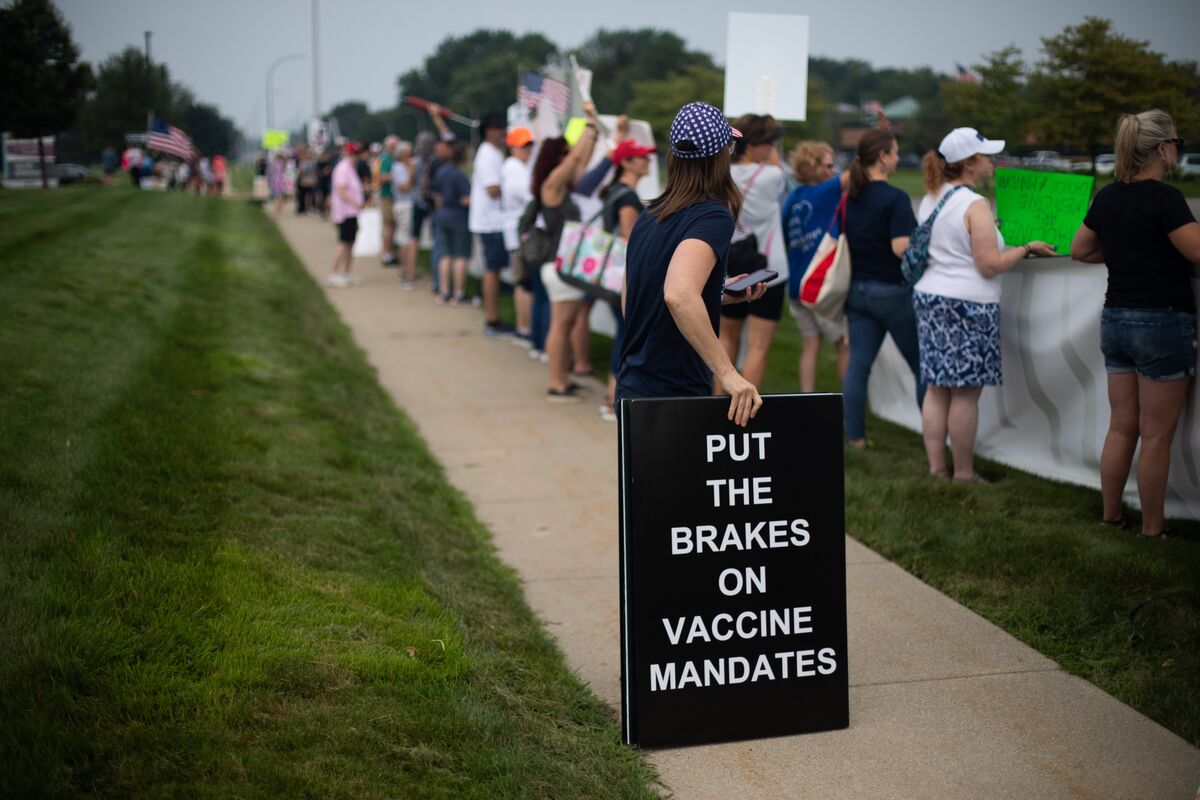
Mobile app shops are cracking down on one of the higher-profile communities spreading anti-vax misnformation. Bloomberg reports that Apple has removed Unjected, a hybrid social and dating app for the unvaccinated, for "inappropriately" referencing the COVID-19 pandemic's concept and themes. While Unjected bills itself as a place to find others who support "medical autonomy and free speech," social posts on the site have included false claims that vaccines modify genes, connect to 5G and serve as "bioweapons."

The app founders are also embroiled in a fight over their Android app. Google told Unjected on July 16th that it had two weeks to remove the misleading posts from its app to avoid a Play Store ban. The developers responded by pulling the social feed. However, co-creator Shelby Thompson said Unjected planned to defy the request by restoring both the feed and the offending posts.

We've asked Apple and Google for comment. Unjected still has a presence on Instagram despite that social network's anti-misinformation stance, although that account mostly promotes its views on "freedom" and only occasionally mentions falsehoods, such as incorrect claims that mRNA vaccines alter DNA. We've asked Facebook for a response as well.

Unjected is small compared to mainstream social networks, with roughly 18,000 app downloads (according to Apptopia). However, the crackdown clearly serves as a warning — Apple and Google won't tolerate apps that knowingly accept and encourage the creation anti-vax content, even if they aren't directly producing that material.

Update 7/31 6:18PM ET: Apple told Engadget that Unjected violated rules demanding reliable COVID-19 information from trustworthy sources, like health agencies and medical institutions. The tech firm further accused Unjected of less-than-honest tactics. The app producer reversed changes made to comply with App Store rules, and encouraged users to help it dodge those rules by avoiding the use of telltale words. Trying to cheat the system is itself grounds for a ban, according to Apple. Don't expect Unjected to come back.

All products recommended by Engadget are selected by our editorial team, independent of our parent company. Some of our stories include affiliate links. If you buy something through one of these links, we may earn an affiliate commission.

Adblock test (Why?)


Apple pulls anti-vax social app over misinformation (updated) - Engadget
Read More

Tensions in the House of Representatives boil over after 1/6 hearing and mask rule - CNN

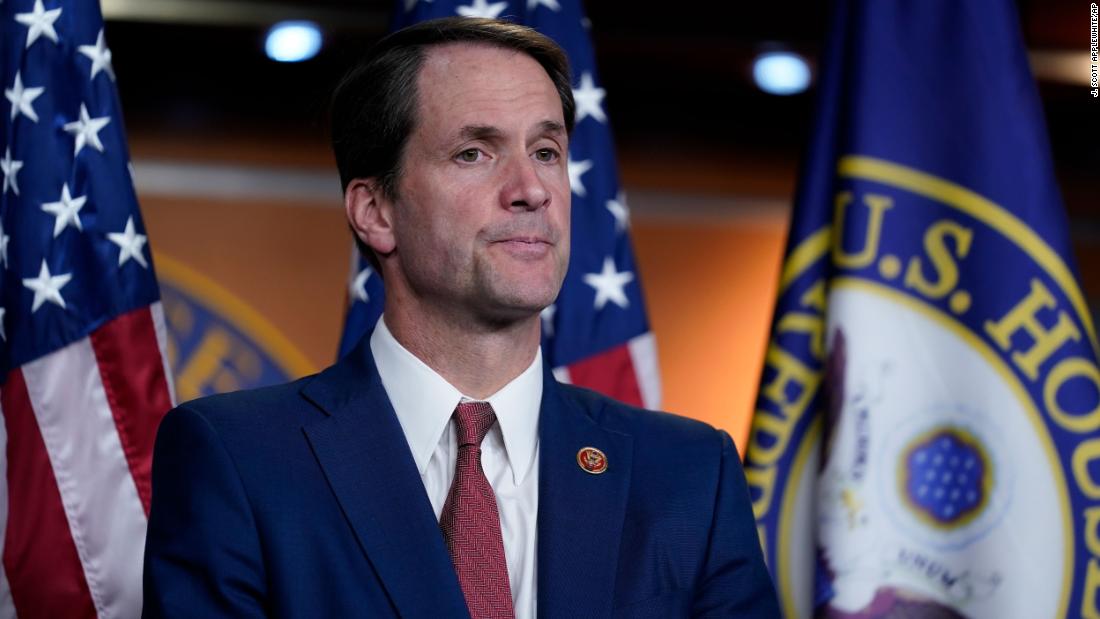
Himes was at the residence of an ambassador with two Republican lawmakers on Tuesday for dinner, just hours after police officers gave explosive testimony about fearing for their lives on January 6 during the Capitol Hill insurrection, when the ambassador asked the group what it was like to be in Congress during the insurrection.
"I'm usually the conciliatory person but I just said 'screw it,'" Himes recalled to CNN, sharing that he could not refrain from calling out his Republican colleagues in that moment.
"I'm not going to sit here and say anything other than what we all know happened," Himes added. "I just said, you know, I will never forgive the President for so damaging our democracy and it's been very, very hard to watch my Republican colleagues collude in this big lie."
After that, Himes said there was a "very long awkward silence."
In the direct months after January 6, tensions between members of Congress were at an all-time high. Many lawmakers refused to work with those who did not vote to certify the presidential election and the installment of the metal detectors off the House floor bred distrust and resentment.
On the Senate side, thawing tensions had slowly become more evident, culminating in the bipartisanship shown in the recent vote to advance the $1 trillion infrastructure package where 17 Republicans joined Democrats.
But on the House side, the last two weeks have put into sharp focus that tense dynamics have gotten worse. The creation of the select committee to investigate the January 6, which pitted House party leadership against each other and put members' previous positions on the attack back in the forefront, followed by a mask mandate being reinstated, has infused a level of rage through the hallways of the House that has poured gasoline on an already scorching working relationship.
"Especially for people who have experience and a history of working with each other across the aisle, I felt like things were finally starting to thaw" a Democratic aide, reflecting on the last few months told CNN. "Unfortunately, now it feels like that came to a halt this week."
The staffer cited the pushback over having to again wear masks and the reality that some lawmakers were not moved by the testimony from police officers at the select committee hearing as the sources of the new tension.

McCarthy withdraws Republicans from a second committee

Just days before his confrontation with his Republican colleagues at the residence of an ambassador, Himes had fallen in the crosshairs of yet another example how political brawls are affecting unrelated business in Congress.
Shortly after he was appointed to serve as chair of the select committee on Economic Disparity and Fairness in Growth, Himes found out that none of the Republicans initially announced to serve with Democrats on the committee would be joining. Minority Leader Kevin McCarthy had retracted his selections to the key select committee on the economy because he was still upset that House Speaker Nancy Pelosi rejected two of his picks for a much more contentious select committee: the one investigating the January 6 riot.
"It's disappointing to me obviously that we got caught up in the whole January 6 committee issue because we are obviously totally, totally separate from that," Himes told CNN.
Himes said he had spoken with McCarthy about his intentions for the select committee ahead of the announcement and got no indication that McCarthy would pull back his appointments until it happened. Although he says he has not spoken to McCarthy since the decision to remove Republicans from his select committee was made, hoping to let "tempers settle," Himes told CNN he plans to reach out to Pelosi and McCarthy about finding a way to "insulate" the committee from being derailed by future political fights.

'I wish we weren't going down this road right now'

Earlier this week, a routine Rules Committee meeting turned into a viral back-and-forth over how members talk about the January 6 insurrection.
Chairman of the Committee on Rules Jim McGovern, a Massachusetts Democrat, pleaded for members to stick to the topic at hand as partisan fights started brewing and detracting from members' work.
"I wish we weren't going down this road right now," McGovern said. "We're now prone to too many generalizations here that paint people here with a broad brush that is inaccurate. And I think if we want to get back to a time where we can actually find common ground, we all got to kind of cool it a little bit."
But things reached a fever pitch when Democratic Rep. Jamie Raskin of Maryland, who serves on the select committee investigating the riot, utilized part of his time to rail on GOP Rep. Andrew Clyde and pin him down on whether he still stands by his previous comments of calling scenes of the January 6 "a normal tourist visit."
Many members called for order, but Raskin pushed to get Clyde to admit that he did not regret his previous statement characterizing January 6 as "a normal tourist visit" even though Clyde refused to concede that by extension he was calling the rioters from that day tourists.
The mask mandate being reinstated in the House has only infused another fiery level of resentment between the two parties.
Lauren Boebert threw a mask at a floor staffer when she was intercepted trying to walk onto the House floor without one. Republicans forced multiple procedural delays on the House floor to protest the new mask mandate. Many in the GOP railed against guidance from Capitol Police on Thursday that said staffers and visitors could be subject to arrest for evading mask rules, even though that exact language was used in a similar release obtained by CNN that went out last year.
The House Republican Freedom Caucus held a press conference pressuring McCarthy to bring a resolution to the floor to remove Pelosi from her chair. Many of them later walked back and forth between the House and Senate without a mask to highlight that the mask guidance is different between the two chambers, and protest its use in the House.
And above all, the rhetoric has reached a screeching new pitch.

It starts at the top

McCarthy said he did not watch the select committee's first hearing investigating January 6. When Pelosi was asked about that by CNN, she shot back, "anytime you mention his name, you're not getting an answer from me. Don't waste my time."
After McCarthy framed the new mask guidance in the House as "a decision conjured up by liberal government officials who want to continue to live in a perpetual pandemic state" Pelosi told reporters, "he's such a moron."
Rank-and-file members have also taken shots at their opposing side.
When McCarthy came to the House floor to rail against the new mask mandate and call into question the science and logic behind the decision, Democratic Rep. Tim Ryan gave an impassioned floor speech calling McCarthy's reasoning "immature and appalling" and ultimately "beneath a minority leader of one of the major political parties in the United States of America."
GOP Reps. Ralph Norman of South Carolina called Pelosi a "disgrace," Jody Hice of Georgia described Pelosi's leadership as "draconian, authoritarian reign," and Andy Biggs of Arizona said her "tyranny knows no bounds."
Democratic Rep. Adam Schiff tweeted of McCarthy on Thursday, "if anyone thought that the deadly incompetence of the GOP ended when Trump left office, Kevin McCarthy proves otherwise. He mirrors the anti-science, anti-truth mentality of the former president. For our democracy's sake, and our health, he must never become Speaker."
Democratic Rep. Jared Huffman got in a yelling match with GOP Rep. Byron Donalds because Donalds, who told reporters he is not vaccinated, refused to put on his mask.
Huffman, wearing a mask, said Donalds was selfish for not wearing a mask, but Donalds responded, "Don't be worried about me! Mind your business!"
GOP Rep. Chip Roy, one of many right-wing Republicans to not wear a mask in protest on Wednesday who has tried multiple times to get the House to adjourn this week said on the House floor, "this institution is a sham. And we should adjourn and shut this place down."
Some are hoping that the House heading towards a seven-week recess will help these tensions simmer.
"Thankfully we're all going home on August recess in a couple of days, and we'll get a little rest from all this," said GOP Rep. Mike Johnson of Louisiana.

Adblock test (Why?)


Tensions in the House of Representatives boil over after 1/6 hearing and mask rule - CNN
Read More

Anti-Vax App Squares Off With Google, Apple Over Misinformation - Bloomberg

Sign up here for our daily coronavirus newsletter on what you need to know

A new social app designed as a community for the unvaccinated is testing Google and Apple Inc.’s policies concerning the spread of misinformation about Covid-19 vaccines.

Adblock test (Why?)


Anti-Vax App Squares Off With Google, Apple Over Misinformation - Bloomberg
Read More

Provincetown's Covid Outbreak Shows 'It's Nowhere Near Over' - The New York Times

Provincetown, Mass., the quirky community at the tip of Cape Cod, thought it was safe to return to prepandemic partying. It wasn’t.

PROVINCETOWN, Mass. — By the Fourth of July, Provincetown’s tourist season had built to a prepandemic thrum. Restaurants were booked solid, and snaking lines formed outside the dance clubs. There were conga lines, drag brunches and a pervasive, joyous sense of relief.

“We really thought we had beat Covid,” said Alex Morse, who arrived this spring as town manager. “We had internalized those messages, that life will be back to normal. We beat this. We are the most vaccinated community in the state.”

Mr. Morse didn’t think much of it, five days after the holiday, when the town’s Board of Health logged two new cases of coronavirus. A week later, though, the cluster of cases associated with gatherings in Provincetown was growing by 50-to-100 cases per day. Alongside the numbers was an unsettling fact: Most of the people testing positive were vaccinated.

Provincetown, a quirky beach community at the tip of Cape Cod, has provided a sobering case study for the country, abruptly tugging Americans back to the caution of winter and spring.

The Centers for Disease Control and Prevention cited the cluster on Friday as key to its decision to issue new indoor mask guidance, saying viral loads among the vaccinated people there were found to be as high as the unvaccinated.

A community of health-conscious, left-leaning Northeasterners, known as a vacation mecca for gay men, Provincetown had one of the highest vaccination rates in the country, upward of 95 percent among permanent residents, Mr. Morse estimates.

On the weekend of July 4, it was also crowded. Around 60,000 people had jammed into a narrow spit of land, where many congregated, maskless, on sweaty dance floors and at house parties.

From the 965 cases that scientists have traced to gatherings in Provincetown, among them 238 residents, scientists have drawn important conclusions about the Delta variant of the coronavirus, which has helped drive a rise in hospitalizations across the country, mostly among the unvaccinated.

The good news is that people infected in Provincetown, about three-quarters of whom were fully vaccinated, were, for the most part, not seriously ill; no deaths were reported, and only seven people were hospitalized. The bad news is that the variant is extraordinarily contagious — as contagious as chickenpox, the C.D.C. said — and people with so-called breakthrough infections may spread the virus to others.

In Provincetown, this news has left behind a feeling of whiplash.

“We are winding the clock back to maybe April or May of 2021,” said Susan Peskin, a longtime summer visitor who moved there full time four years ago. “Now it is clear, as clear as day, that you can be vaccinated and still get Covid. Bottom line, we have to really watch ourselves and not think it is over. It is nowhere near over.”

Matt Cosby for The New York Times

Ms. Peskin, a financial analyst, remembers how strange it felt to let her guard down this spring. One day, she went into a restaurant for happy hour and saw the Plexiglas barrier had vanished, so she could stare the bartender straight in the face.

Through the height of the pandemic, Provincetown had followed strict protocols. She had never seen the bottom half of her nail technician’s face. It was jarring the first time she walked into a business without a mask.

“It was like putting a toe in the water,” she said. “Slowly but surely, I was unwinding everything I had put in place. It was an unwinding of fear.”

Soon, visitors were arriving in Provincetown in waves, something Ms. Peskin watched with a twinge of apprehension. Beside Herring Cove Beach, where, on a normal summer day, 100 or 200 bicycles might be lined up on the fence, she counted five times that many.

Matt Cosby for The New York Times

So many gay men poured in for Circuit Party week, the first week of July, that people on social media started sharing photos of the lines outside clubs, snaking for blocks.

That period marked “the best weeks our businesses have had in a very long time,” Mr. Morse, the town manager, said. It was, he said, a sense of release that they all needed.

“There was a collective feeling that everyone had been through so much, individually and collectively, over the last 18 months,” he said.

Steve Katsurinis, the chair of the town Board of Health, said the venues were in line with C.D.C. guidance.

“We were told, ‘Now you’re vaccinated, and everyone is vaccinated, you can go out and live the pre-Covid lifestyle,’” he said. “People did, they were living with gusto. We were led to believe, ‘If you get the vaccine, you can go to a dance club, you can go to a house party and meet someone and make out.’ That’s what we thought the situation was.”

By the end of the week, Mr. Katsurinis was taking reports of positive coronavirus cases — all gay men, with an average age of 30 to 35, many of whom who had seen a doctor for other reasons, like flu symptoms or sexually transmitted infections, not suspecting the coronavirus. What puzzled him, he said, was that so many of the infected people were vaccinated.

“I couldn’t believe, frankly, that vaccinated people were getting and spreading it, the way that the contact tracing people were saying,” he said. “I had that moment of saying, ‘I don’t believe that data is accurate.’”

Days passed, he said, before it was clear that the virus circulating was the Delta variant, “and I went, oh, OK. Delta is a different thing.”

“I don’t think we could have anticipated what Delta would do here,” he said.

Infectious disease specialists have praised the community’s meticulous contact tracing, carried out largely by four nurses in Barnstable County, for helping them to understand the scope of the outbreak.

As town leaders debated what health measures to reintroduce, Mr. Morse said he was concerned about overreacting, or making decisions “based on the loudest and most frantic voices.”

But successive waves of tests showed a rising positivity rate, hitting a peak of 15 percent on July 15. The town issued an indoor mask advisory four days later, Mr. Morse said, and made it mandatory on July 25.

“We are entering a new era of having to live with the virus,” he said. “In the long term, it’s not going to be feasible to mask up one weekend and let it go the next.”

Matt Cosby for The New York Times

Late-summer Provincetown is a different Provincetown — still crowded, but cautious, alert for bad outcomes. The town’s positivity rate dropped to 4.6 percent on Thursday; its mask mandate will automatically become an advisory, and then be lifted, if it remains low.

Rick Murray, the general manager of the Crown and Anchor, a beachside inn that houses bars and nightclubs, says it is part of the community’s DNA to be “very, very responsible” in a health crisis.

“When the AIDS epidemic came, we took care of our own, and we will take care of our own now,” said Mr. Murray, who has been H.I.V. positive for 37 years. He said he anticipated that guarding against the virus will be challenging “for another two or three years, easily.”

“This is not going to go away,” he said.

It was simple enough for Liz Carney, 50, who owns the Four Eleven Gallery on Commercial Street, to revert to strict coronavirus protocols. There was muscle memory. For an opening scheduled for Friday, she went back to that old, restrained style: masks required, no beverages served, and only three people allowed in the gallery at a time.

Thinking back to the exuberant crowds of June, she said it was “a bit naĂŻve” to think it was safe to congregate inside — but also, she misses them.

“There was just a joy and an exhilaration,” she said. “It was very exciting. I wish I had taken a twirl on the dance floor while I had a chance.”

Adblock test (Why?)


Provincetown's Covid Outbreak Shows 'It's Nowhere Near Over' - The New York Times
Read More

Lawmakers, Hogan Administration at Odds Over Secretary's Absence From Health Briefing – Maryland Matters - Josh Kurtz

A briefing between the Maryland Department of Health and Maryland General Assembly committees was abruptly ended Friday, after the state's health secretary did not appear. Screenshot.

A joint briefing of two legislative committees went far shorter than was anticipated Friday afternoon, after Maryland’s Health secretary didn’t appear.

“This is unacceptable. We’re going to reschedule this briefing,” House Health and Government Operations Chairwoman Shane E. Pendergrass (D-Howard) said during the joint meeting that also included members of the Senate Finance Committee and House Appropriations Committee.

The meeting ended in just over five minutes, though Maryland Department of Health Assistant Secretary Webster Ye said he was prepared to move forward with a presentation on the issues to be discussed. Also present was Dr. Aliya Jones, deputy secretary for behavioral health.

But Pendergrass took the extraordinary step of halting the briefing.

“I am astonished and disheartened to hear that the secretary’s other commitments supersede meeting with the people who are present here today,” Pendergrass said.

Senate Finance Chairwoman Delores G. Kelley (D-Baltimore County) expressed agreement with the decision.

“The meeting that we were here to have is of critical importance. And all who were invited and were here deserve to have to the top level of the Health department hear our concerns,” Kelley said.

The briefing was scheduled to address concerns with reimbursement rates and regulatory changes for health programs, including for home health care programs and telehealth care for behavioral health providers.

About 10 health care providers were present for the call, which Pendergrass said she hoped could be rescheduled for next week.

“I apologize to all of the stakeholders who are present. All of the people who have made room in their schedule,” Pendergrass said. “I know many of you have other jobs, whereas the secretary has one job.”

The Maryland Department of Health communications office referred questions about the briefing to the governor’s office.

Michael Ricci, director of communications for the governor’s office, said the committee was notified Thursday morning that Health Secretary Dennis R. Schrader would not be able to attend.

He said Pendergrass “chose to pull a stunt” in canceling the virtual meeting once everyone was assembled. Pendergrass said she received updated meeting documents on Thursday, but wasn’t aware Schrader would not attend.

“What happened today is deeply disrespectful to Dr. Jones, and to the rest of the providers as well,” Ricci texted.

He said the administration was reviewing a request by the committees to reschedule the meeting.

Pendergrass said regardless of when the committee members might have known about Schrader’s absence, the fact that a legislative hearing was not prioritized reflected a trend by his office.

“This is indicative of the way the legislature – the House Health and Government Operations Committee – has been treated by the department,” Pendergrass said. “…And how the advocates and providers feel they’re being treated. It follows a pattern of not getting answers.”

[email protected]

Adblock test (Why?)


Lawmakers, Hogan Administration at Odds Over Secretary's Absence From Health Briefing – Maryland Matters - Josh Kurtz
Read More

Who Is Calling The Shots On COVID In Kansas? It's Difficult To Say - NPR

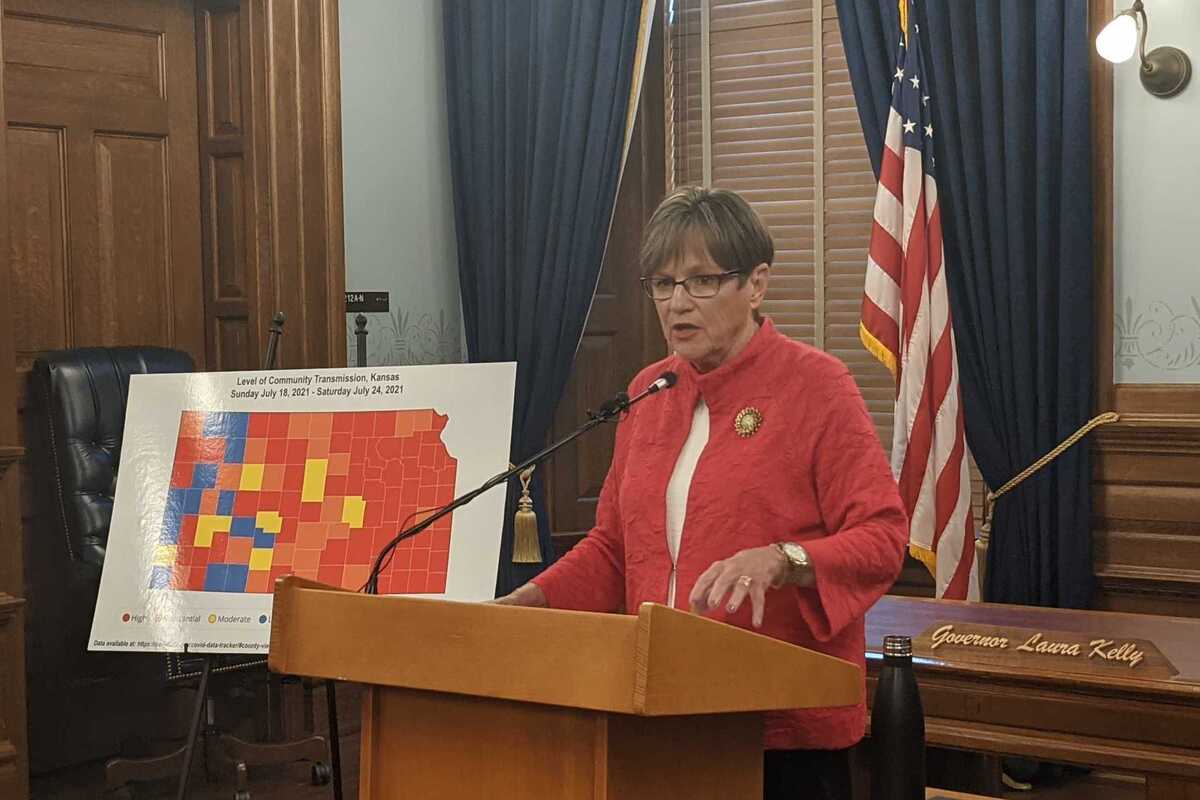
Democratic Kansas Gov. Laura Kelly's legal battle with the Republican-led Legislature has left confusion over whether she has the authority to issue new pandemic restrictions. Kelly did not issue a mask mandate when speaking Wednesday from the state Capitol in Topeka. Abigail Censky/KCUR

Abigail Censky/KCUR

It's been difficult to make sense of all of the varying guidance and mandates on masking and vaccines from the Centers for Disease Control and Prevention, states and local governments. But in Kansas, where cases are rising, it is also difficult to know who has the power to call the shots since Democratic Gov. Laura Kelly's executive authority remains in legal limbo.

The state's Republican attorney general is expected to appeal a recent ruling saying that the Kansas Legislature's limits to Kelly's emergency powers are flawed and unenforceable, but the court fight has left confusion about the power of the governor and local public health officials to impose rules aimed at combating the pandemic.

While awaiting a final decision, Kelly has yet to take forceful action in response to the resurging pandemic — such as mask mandates she'd issued in the past that could slow the state's economic recovery and that would surely draw strong resistance.

In March, the governor compromised with state lawmakers, agreeing to give up some of her power. When she issued another statewide mask mandate, a panel of state lawmakers voted it down 5-2. By early April, the number of counties with mask mandates dropped to seven, down from 57 in February.

Now, the delta variant of the coronavirus has 84 of the 105 counties in the state caught in a regional hot zone, and none of the 105 has mask mandates in place. Meanwhile, more than half of all eligible Kansans are not vaccinated.

The Kansas Department of Health and Environment reported more than 2,000 new COVID-19 cases since Wednesday, most of which are the result of the new ultra-contagious delta variant.

But on Wednesday, Kelly stopped short of issuing another statewide mask mandate. Instead, she chose to coax.

Even vaccinated Kansans, she said, ought to wear masks indoors in 84 of Kansas' 105 counties. Her guidance mirrored earlier advice from the CDC. She did require most state workers to wear masks on the job.

"I'm as frustrated as any other vaccinated Kansan," Kelly said. "I feel like I did my part. And one of the rewards of that was not having to wear a mask."

"But that option has now been taken away," she said, "because of the delta variant and how much more contagious it is, and how few Kansans, unfortunately, have gotten vaccinated."

Local health officials fear infections and ire

Aften Gardner is the health administrator for rural Wallace County, where there's never been a countywide mask mandate. With 34% of her population fully vaccinated, Gardner said she's worried again.

She's also president of the Kansas Association of Local Health Departments. Gardner said in her opinion nobody wants to draw residents' ire by imposing a mask mandate or repurposing pandemic restrictions — not the governor, not local health officials and certainly not county commissioners. Doing so would provoke surefire vitriol.

"The attitude is very much, 'This is a free country. I'm not gonna make you do anything. You have every right to mask up, but you can't tell me to do anything.' That's pretty much the stance."

She said over the course of the pandemic, the health department's working relationship with county partners and community members "has pretty much been destroyed."

"We have been labeled the bad guys," Gardner said. In fact, around 30% of Kansas' health officers and administrators have left their jobs during the pandemic, many after personal attacks for the public health policies they were the face of.

''Legal anarchy"

That same anger has also been directed at the governor. When reporters asked Kelly if she'd consider reimposing a statewide mask mandate, she deflected.

"We don't want to spend a lot of energy thinking about that," she said, "or diluting our resources in ways that will distract from getting these shots in arms. "

But until the state Supreme Court weighs in, it's hard to know if Kelly's reluctance to act is a question of legal authority or political will.

Her executive authority to respond to emergencies has been hollowed out over the course of the pandemic.

The conservative supermajority in the Kansas Legislature passed laws shifting the state's pandemic response to local county commissions, hamstringing the ability of Kelly and local health officials to respond.

One of the new laws required speedy judicial review for anyone with a grievance of a mask policy or restriction issued by a school board or local government. In the case of a disagreement between a parent and a school board, a court had to hold a hearing on the issue in three days and issue an order within seven.

Kelly's power atrophied so greatly under the law that Republican leaders were able to supersede her requests to extend the state of emergency in June.

However, some power could be restored if the state Supreme Court rules in her favor, agreeing with a lower court ruling that the Kansas Legislature was stepping on the toes of the judicial branch and depriving local governments of due process.

"It is the ultimate legislative stick intended to goad and/or supplant judicial rules and functions," Johnson County District Judge David Hauber wrote. "It promotes the equivalent of legal anarchy."

With Kansas Attorney General Derek Schmidt expected to appeal, he contends the ruling prompted "unnecessary and disruptive confusion," potentially making it difficult for the state to respond to a future disaster emergency. He said it "invited the very sort of 'legal anarchy' that troubled the court."

In her Wednesday news conference, Kelly deflected questions about whether she thought local health officials had the authority to respond to the pandemic.

"I'm gonna leave that to the local units of government and the school boards to decide how they want to interpret what the judge's ruling does," Kelly said.

A later statement said, "Our office does not want to speculate until a decision is reached by the Kansas Supreme Court, which we anticipate will happen soon."

Dennis Kriesel, executive director of the Kansas Association of Local Health Departments, said that the district court decision likely doesn't apply statewide.

Local health officers can do things such as issue a mask mandate and limit the size of gatherings with or without the law. But under the law in limbo, they'd have to get the blessing of their county officials, and commissioners in two of Kansas City's largest metro counties have been reluctant to sign on to recommendations for temporary mask mandates.

"In terms of the ability to issue orders, we have more flexibility now than we did two months ago," Kriesel said. "That being said, I don't think we're going to see nearly the amount of aggressive ordering that we saw in the fall of last year because of the backlash."

Regardless of who has the authority to respond, Kriesel said, public health officials are looking for political cover.

"You could probably, on one hand," he said, "count the number of local health officers that would be willing to issue an order without knowing what their commissioners' stance was."

Adblock test (Why?)


Who Is Calling The Shots On COVID In Kansas? It's Difficult To Say - NPR
Read More

As Covid Cases Rise All Over U.S., Lower Vaccination Rates Point to Worse Outcomes - The New York Times

The highly contagious Delta variant is now responsible for almost all new Covid-19 cases in the United States, and cases are rising rapidly. For the first time since February, there were more than 100,000 confirmed cases on Tuesday, the same day the Centers for Disease Control and Prevention recommended that vaccinated people should resume wearing masks in public indoor spaces in communities where the virus is surging.

That updated guidance was based in part on a new internal report that cited evidence that vaccinated people experiencing breakthrough infections of the Delta variant, which remain infrequent, may be as capable of spreading the virus as infected unvaccinated people.

Several studies, including ones referenced in the C.D.C.’s presentation, have shown that vaccines remain effective against the Delta variant, particularly against hospitalization and death. That has held true in the real world: About 97 percent of those recently hospitalized by the virus were unvaccinated, the C.D.C. said. But in counties where vaccination rates are low, cases are rising fast, and deaths are also on the rise.

Where current vaccination rates are low, cases are rising more quickly...

Counties with high vaccination rates

May 1

July 29

Delta becomes dominant in the U.S. in June

10

20

30 cases per 100,000 residents

Counties with low vaccination rates

May 1

July 29

10

20

30 cases per 100,000 residents

... And deaths have increased, rather than remaining flat.

Counties with high vaccination rates

May 1

July 29

Delta becomes dominant in the U.S. in June

0.1

0.2

0.3 deaths per 100,000 residents

Counties with low vaccination rates

May 1

July 29

0.1

0.2

0.3 deaths per 100,000 residents

Source: New York Times database of reports from state and local health agencies and hospitals·Counties are considered to have high vaccination rates if at least 60 percent of the population is currently fully vaccinated. Counties with low vaccination rates are those where less 30 percent of the population is currently fully vaccinated.

The latest increase in cases has set records in some parts of the United States. Many of the places seeing more new cases than at any other point during the pandemic also have some of the country’s lowest vaccination rates.

The Branson, Mo., and Harrison, Ark., areas have both set records this month. Less than 30 percent of all residents in either place are fully vaccinated.

Cases are beginning to level off or decrease after peaks in much of the Ozarks, which had seen one of the country’s worst recent outbreaks. Now Louisiana is experiencing a surge and is seeing more new cases than at any other point during the pandemic. Daily case rates there are more than 10 times higher than the average level in June.

Where case counts are the highest of the whole pandemic

Surpassed a previous case record this month

Near a record number of cases

Counties where 30 percent

or less of the population

is fully vaccinated

Many counties that have set records

or nearly set records this month

also have low vaccination rates.

Vaccine data for Georgia

and three other states is not

shown because more than a

quarter of the data is missing.

Surpassed a previous case record this month

Near a record number of cases

Counties where 30 percent

or less of the population

is fully vaccinated

Many counties that have set records

or nearly set records this month

also have low vaccination rates.

Vaccine data for Georgia

and three other states is not

shown because more than a

quarter of the data is missing.

Surpassed a previous case record this month

Near a record number of cases

Counties where 30 percent

or less of the population

is fully vaccinated

Many counties that have

set records or nearly set

records this month also

have low vaccination rates.

Vaccine data for Georgia

and three other states is not

shown because more than a

quarter of the data is missing.

Surpassed a previous case record this month

Near a record number of cases

Counties where 30 percent

or less of the population

is fully vaccinated

Many counties that have set records

or nearly set records this month

also have low vaccination rates.

Vaccine data for Georgia

and three other states is not

shown because more than a

quarter of the data is missing.

As the United States continues to face a virus that is in its most contagious form yet, experts predict a divide will remain between vaccinated and unvaccinated communities. Hospitals in some parts of the country where vaccination rates are low are once again setting up overflow wards, while hospitals where vaccination rates are higher might see a smaller influx of patients.

In the United Kingdom, the Delta variant became the main form of the virus in May, when a large share of the population had already been vaccinated. Three months later, virus cases are on a downward trend after reaching a level almost as high as the country’s highest-ever peak in January. Deaths have not reached anywhere near previous peaks, a sign that the U.K. vaccine rollout, which prioritized residents by age, protected many of the country’s most vulnerable by the time the Delta variant fueled a surge.

Adblock test (Why?)


As Covid Cases Rise All Over U.S., Lower Vaccination Rates Point to Worse Outcomes - The New York Times
Read More

Beavers Clinch Series Over UC Irvine - OSU Beavers

Next Game: UC Irvine 3/6/2022 | 1:05 PM Oregon State Live Stream Mar. 06 (Sun) / 1:05 PM   UC Irvine CORVALLIS, Ore...