Rechercher dans ce blog

Saturday, March 5, 2022

Beavers Clinch Series Over UC Irvine - OSU Beavers

CORVALLIS, Ore. – Jake Dukart hit a pinch hit three-run home run and Tanner Smith was 3-for-4 with two doubles as No. 13 Oregon State overcame two deficits to defeat UC Irvine, 9-5, Saturday afternoon at Goss Stadium at Coleman Field.
 
The Beavers clinched the series over the Anteaters (5-5 overall) with Saturday's win, and go for the sweep Sunday at 1:05 p.m. PT.
 
Dukart's three-run blast came during the Beavers' five-run fifth inning. OSU came into the inning trailing 4-3, but tied the game when Jacob Melton drove in his 19th run of the season.
 
Smith made it 5-4 with his second double of the game, then scored when Dukart hit the second home run of his career.
 
OSU's pitching staff combined to hold UC Irvine to five runs on seven hits while striking out 12. Jacob Kmatz made his second start of the season, and worked four innings, allowing three hits and four runs with seven strikeouts.
 
The trio of Ian Lawson, Reid Sebby and DJ Carpenter combined to strike out five in five innings of relief, allowing four hits and a run. Lawson picked up the win to improve to 2-0 this season while Carpenter earned his first save.
 
UC Irvine scored three in the third to get on the board first, but OSU answered back with three runs of its own. Justin Boyd, who went 3-for-5, drove in the Beavers' first run, followed by an RBI groundout from Melton. Garret Forrester tied the game with a sacrifice fly.
 
The loss went to UC Irvine's Nick Pinto, who dropped to 0-2 this season. He allowed seven hits and six runs in 4 2/3 innings.
 
Next Up
The teams finish their three-game series Sunday afternoon at Goss Stadium at Coleman Field. First pitch is slated for 1:05 p.m. PT.
 
Game Notes
- Mason Guerra made his first career start, batting in the sixth spot at designated hitter.
- Jake Dukart's pinch-hit home run was Oregon State's first since Kyle Froemke at UC Irvine on April 25 of last season.
- Oregon State's pitchers have struck out 29 over the first two games of the season.
- Justin Boyd extended his hit streak to 13 games. He is 20-for-50 with five doubles, a triple, home run and 10 walks during the streak.
- Boyd is 4-for-6 with five RBI during the series.
- Boyd now has five multiple-hit efforts this season. Tanner Smith, meanwhile, has two.
- Smith joins Boyd (Feb. 20 vs. New Mexico) as Beavers with two double-efforts this season.
- Jacob Melton extended his hit streak to 11 games with a 1-for-5 day. He is 20-for-45 during his streak.
- The Oregon State pitching staff has struck out 99 this season while issuing just 27 walks.
- Conversely, the Beavers have drawn 59 walks to just 65 strikeouts.
- Oregon State's pinch hitters are now 6-for-10 this season.
- OSU has out-scored its opponents, 18-2, in the fifth inning this year.
 
Follow Us On Social
For more information on the Oregon State baseball team, follow the club's official Twitter account at Twitter.com/BeaverBaseball, by Facebook at Facebook.com/OregonStateBaseball or on Instagram at Instagram.com/BeaverBaseball.

OUR MISSION
Oregon State Athletics strives to Build Excellent Authentic Visionary Student-Athletes (Go BEAVS).
 

Print Friendly Version

Adblock test (Why?)


Beavers Clinch Series Over UC Irvine - OSU Beavers
Read More

Friday, March 4, 2022

Zelensky Criticizes NATO Over Its Rejection of a No-fly Zone Over Ukraine - The New York Times

President Volodymyr Zelensky of Ukraine criticized NATO late Friday night over its rejection of a no-fly zone, hours after the alliance announced it would not intervene by air or land for fear of creating a conflict with Russia that could spill into other parts of Europe.

Leaders of the alliance met Friday in Brussels, after which NATO’s secretary general, Jens Stoltenberg, said its members had rejected any possibility of intervening against Russian forces. Ukrainian officials had called for a no-fly zone, but NATO leaders have resisted, worried about a larger war. President Vladimir V. Putin of Russia, announcing the invasion last month, warned other countries against interfering.

“We have a responsibility as NATO allies to prevent this war from escalating beyond Ukraine,” Mr. Stoltenberg said on Friday. “So we have made it clear that we are not going to move into Ukraine, neither on the ground or in Ukrainian airspace.”

Creating a no-fly zone over Ukraine would require deploying NATO fighter planes and possibly “shooting down Russian planes,” Mr. Stoltenberg said. That, he warned, could lead to “a full-fledged war in Europe, involving many more countries and causing much more human suffering.”

Mr. Zelensky, speaking in a video shared on social media, criticized that decision, calling the summit “weak” and “lost.” He said that Russian troops were shelling civilians, residential areas, churches and schools, and that the decision not to create a no-fly zone “gave a green light” to more bombardment.

“All the people who will die from this day will die because of you, as well,” he said, addressing NATO’s leaders. “Because of your weakness. Because of your disunity.”

Mr. Zelensky has used video speeches, many released late at night over social media, to try to rally Ukrainians as well as support from abroad. While he has celebrated the major sanctions imposed by the United States and the European Union on Russia’s financial system and leaders, he has also repeatedly called on European leaders to provide additional military support.

About 20 countries, many of them members of NATO and the European Union, are funneling arms into Ukraine for its forces to use against Russia. NATO is also moving military equipment and as many as 22,000 more troops into member states bordering Russia and Belarus, to reassure them and enhance deterrence.

Adblock test (Why?)


Zelensky Criticizes NATO Over Its Rejection of a No-fly Zone Over Ukraine - The New York Times
Read More

China to pull Premier League TV coverage this weekend over Ukraine support - ESPN

Chinese broadcasters will not air Premier League matches this weekend in response to the league's planned support of Ukraine, sources have confirmed to ESPN.

The news was first reported by the BBC.

- Soccer on ESPN+: FC Daily | Futbol Americas
- Don't have ESPN? Get instant access

The Premier League announced on Wednesday that a show of solidarity with Ukraine amid Russia's invasion of the country would be visible at all matches from Saturday through Monday. China is a close political ally of Russia.

"The Premier League and our clubs wholeheartedly reject Russia's actions and will be showing support for the people of Ukraine at all matches this weekend," read a statement from the league.

"We call for peace and our thoughts are with all those who have been impacted."

Among the symbols of support, all 20 Premier League captains will wear special armbands in Ukrainian colors, and a moment of reflection and solidarity will be held before each game. Big screens and perimeter LED boards will display "Football stands together" against a backdrop of Ukrainian colors.

The Premier League also said that its logos would be changed to represent the blue and yellow colors of the Ukrainian flag and would be displayed across broadcasts in the UK and overseas.

This is not the first time that Chinese broadcasters have pulled coverage of the Premier League. In 2019, a game between Arsenal and Everton was blocked from airing on the state-run Chinese Central Television (CCTV) after then-Arsenal player Mesut Ozil criticised China's treatment of its Muslim Uyghur minority.

On Thursday, Premier League chief executive Richard Masters said that the Premier League's broadcasting deal to show the league on Russian television was "under review."

Adblock test (Why?)


China to pull Premier League TV coverage this weekend over Ukraine support - ESPN
Read More

Thursday, March 3, 2022

Democrats Win Early Victory in Court Fight Over District Maps - The New York Times

A judge’s stance was good news for Democrats, who drew the maps that Republicans say are gerrymandered, but the case will proceed.

A New York State judge indicated on Thursday that he would allow this year’s midterm elections to proceed using the state’s newly drawn district lines that heavily favor Democrats — rebuffing Republican requests to delay the election process while he considers whether the maps are an unconstitutional gerrymander.

In a preliminary hearing in Steuben County Supreme Court, Justice Patrick F. McAllister, a Republican, said that even if he ultimately ruled that the maps were unconstitutional, it was “highly unlikely” that replacements could be ratified in a timely manner ahead of primaries in June and Election Day in November. That, in turn, would risk leaving the state without proper representation in Congress.

“I do not intend at this time to suspend the election process,” the judge said. “I believe the more prudent course would be to allow the current election process to proceed and then, if necessary, allow an election process next year if new maps need to be drawn.”

Justice McAllister’s conclusion delivered a sharp setback to state Republicans, who sued last month to try to stop the new congressional and State Senate lines drafted by the Democrat-controlled State Legislature from taking effect this year. The Republicans believe their party is well positioned to retake control of the House of Representatives in November, but every seat could count.

The fresh New York boundaries would make that harder, giving Democrats an advantage in 22 of the state’s 26 congressional districts, while potentially cutting the current number of Republican House members from New York in half and effectively eating into gains won by redistricting measures in other states. Analysts have suggested the new State Senate lines could be just as favorable to Democrats, helping the party maintain its supermajority in Albany.

Legal analysts who study redistricting said that Justice McAllister or an appeals court could still conceivably rethink his approach, but a court-ordered delay to this year’s elections was an increasingly unlikely scenario, now that candidates have begun collecting petitions to get on the June primary ballot.

“If I were a candidate, I think the smart bet is that the maps we have today are the maps that are going to be used in November,” said Michael Li, senior counsel for the Democracy Program at the Brennan Center for Justice. “There doesn’t seem to be the will to change them for this cycle.”

Still, Republicans left the hearing room in Bath, N.Y., on Thursday with some reasons for optimism.

Justice McAllister rejected motions to dismiss the case and indicated that he was open to arguments that the maps had violated language added to the New York Constitution in 2014 that barred mapmakers from drawing lines to benefit one political party or candidate.

The judge also ordered Democrats to hand over a raft of documents by March 12 that might shed light on how the Democratic drafters settled on the lines, and he told both sides to appear a few days later to argue over the merits of the Republicans’ challenge.

“The important thing here is that the court rejected all of the efforts by the State Legislature and the attorney general to dismiss the case,” said John J. Faso, a former congressman from New York who is serving as a spokesman for the Republican challengers — a group of New York residents backed by deep-pocketed national Republican groups.

Mr. Faso said that the Republican lawyers would continue to argue that there was enough time to draw new maps for use in this year’s elections. “You can’t really allow an election to take place if the lines are declared unconstitutional, and there is time for a remedy,” he said.

Democratic leaders have not disputed that the maps may produce gains for their party. But they say that those gains would result not from their mapmakers’ partisan motives but from the realities of population shifts that have made an already blue state much bluer since the last redistricting cycle in 2012.

Redistricting experts have called New York’s new maps a political gerrymander. But proving that beyond a reasonable doubt in court, where judges tend to show deference to lawmakers, may be difficult. Justice McAllister called it a “high bar” on Thursday.

If the maps are tossed out, New Yorkers could be asked to vote in three consecutive years for House members and state senators — in regularly scheduled elections in 2022 and 2024, as well as a special election in 2023.

Lawyers for the Democrats vowed to immediately appeal the judge’s order to hand over documents quickly, which could further complicate the proceeding. Under special rules used to speed up the case, Justice McAllister must render a verdict by April 4.

Luis Ferré-Sadurní contributed reporting.

Adblock test (Why?)


Democrats Win Early Victory in Court Fight Over District Maps - The New York Times
Read More

Russian businesses in US face threats, vandalism over invasion - Axios

Some Russian restaurants and businesses in the U.S. are facing threats, harassment and vandalism in the days since Russia launched its invasion of Ukraine.

Driving the news: Russia House Restaurant and Lounge in Washington, D.C. was vandalized twice last weekend, resulting in smashed windows, a broken door and what is believed to be anti-Russian rhetoric posted on the walls, WUSA9 reports.

  • "We’re getting some hate phone calls," owner Aaron McGovern told the Washington Post, adding that his restaurant "has nothing to do with" the invasion.
  • "We are a U.S.-owned company trying to survive," McGovern said.

Pushkin Russian Restaurant in downtown San Diego is also receiving threats, and people are leaving 1-star reviews online saying the restaurant supports the invasion, owner Ike Gazaryan said, per ABC 7.

  • The threats have progressively gotten worse as the invasion has gone on, with some threatening to blow up the restaurant, Gazaryan told ABC 7.
  • Gazaryan said that claims that the restaurant backs the invasion are not true, adding that half of his workers are Ukrainian.
  • "It bothers me mostly because it's the other way around," Gazaryan said. "I've donated money to the Ukrainian cause. I've given money to my employees to send to their parents in Ukraine."

Diana Deli in Columbus, Ohio, which is managed by two people — one is from Ukraine and the other is from Russia — has been getting threats since the invasion.

  • "They were asking which car in the parking lot was ours ... asking if people stay the night implying that they were going to smash the windows and things," Andrew Wurth, who works at Diana Deli, told 10 WBNS.
  • "We're just here to sell food," Wurth said.

Sveta in New York City is scrubbing its online presence — its website, social media and Yelp — of any mention of Russian food, Insider reports.

  • The restaurant's owner on the first day of the invasion received an email with the subject line, "Hate Russians."

The bottom line: The Russian House of Austin changed its name to "The House" in solidarity with Ukraine, KXAN reports.

  • "I’m doing this for people of Russia, because there are so many people who don’t want this war. I’m doing this for people of Austin, because they need to know our position and understand what we really are," owner Varda Monamour said.

Go deeper: Get the latest with the Russia-Ukraine dashboard

Adblock test (Why?)


Russian businesses in US face threats, vandalism over invasion - Axios
Read More

US Supreme Court blocks testimony over Guantanamo detainee - Al Jazeera English

A Polish investigation concerns the treatment of Abu Zubaydah, who remains at the American naval base at Guantanamo.

The United States Supreme Court has ruled that two former CIA contractors cannot be questioned in a criminal investigation in Poland over their role in interrogating Abu Zubaydah, a suspected high-ranking al-Qaeda figure who was repeatedly subjected to waterboarding.

The justices on Thursday ruled 6-3 that Central Intelligence Agency contractors James Elmer Mitchell and John Bruce Jessen cannot be subpoenaed under a US law that lets federal courts enforce a request for testimony or other evidence for a foreign legal proceeding.

The court found that the government could assert what is called the “state-secrets privilege” to prevent the contractors from being questioned because it would jeopardise national security.

Poland is believed to be the location of a “black site” where the CIA used harsh interrogation techniques against Zubaydah. Zubaydah, now 50, has spent more than 15 years at the US jail at Guantanamo Bay. He lost an eye and underwent waterboarding 83 times in a single month while held by the CIA, US government documents showed.

Al Jazeera reported in 2014 that Zubaydah “was the only captive subjected to all 10 torture techniques identified in an August 2002 Justice Department memo”.

The contractors’ testimony “would be tantamount to a disclosure from the CIA itself”, Justice Stephen Breyer wrote in the ruling.

“For these reasons, we conclude that in this case the state secrets privilege applies to the existence (or nonexistence) of a CIA facility in Poland,” Breyer added.

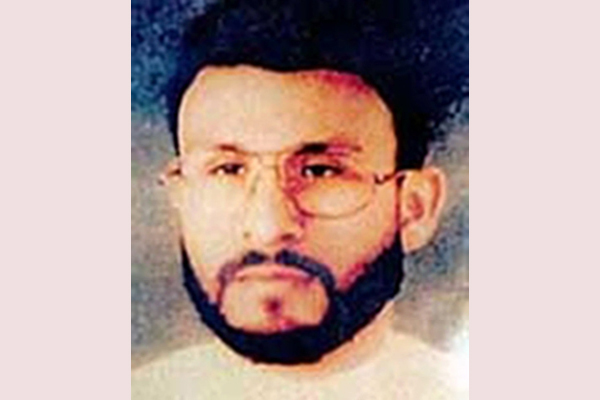
Photo provided by US Central Command, shows Abu Zubaydah, date and location unknown.
This file photo, provided by US Central Command, shows detainee Abu Zubaydah; date and location unknown [File: US Central Command via AP]

The justices were divided on what exactly should happen, with six justices saying Zubaydah’s request should be dismissed. Conservative Neil Gorsuch and liberals Sonia Sotomayor and Elena Kagan said the case should be sent back to lower courts.

Gorsuch wrote a strongly worded dissenting opinion joined by Sotomayor saying that much of what the government claims to be a state secret is already widely known.

“There comes a point where we should not be ignorant as judges of what we know to be true as citizens,” Gorsuch wrote.

“Ending this suit may shield the government from some further modest measure of embarrassment. But respectfully, we should not pretend it will safeguard any secret,” Gorsuch added.

The Polish investigation concerns the treatment of Zubaydah, who remains held at the American naval base at Guantanamo Bay, Cuba. Zubaydah, a Palestinian man captured in 2002 in Pakistan and held by the US since then without charges, repeatedly underwent waterboarding, a form of simulated drowning widely considered torture.

At the case’s October oral arguments, some justices asked why the government would not let Zubaydah himself be questioned. The Justice Department later told the court it would agree to Zubaydah sending a declaration that could be used in the Polish investigation, although it would have to be reviewed first. Zubaydah’s lawyers called that approach unacceptable.

Zubaydah was “an associate and longtime terrorist ally of Osama bin Laden”, the leader of the al-Qaeda armed group killed by US forces in Pakistan in 2011, according to a Justice Department filing.

The non-profit American Civil Liberties Union (ACLU) assailed the court ruling.

“Today a majority of the Supreme Court allowed the CIA to declare secret the widely-known location of its torture facility in Poland,” Dror Ladin, senior staff attorney with the ACLU’s National Security Project, said in a statement.

“US courts are the only place in the world where everyone must pretend not to know basic facts about the CIA’s torture program. It is long past time to stop letting the CIA hide its crimes behind absurd claims of secrecy and national security harm.”

The justices have turned away multiple cases brought by Guantanamo detainees challenging their confinement. Zubaydah’s own case has been pending in lower courts for more than 10 years.

His lawyers have said Mitchell and Jessen could testify about what they saw and heard without mentioning the location. The government disputes that assertion.

The US government has disclosed that Zubaydah was held overseas and interrogated using “enhanced interrogation techniques” but has not revealed locations. The European Court of Human Rights determined that Zubaydah was held in Poland in 2002 and 2003.

The San Francisco-based 9th US Circuit Court of Appeals ruled in 2019 that Mitchell and Jessen could be subpoenaed, prompting the Justice Department to appeal to the Supreme Court.

Details of CIA activities were confirmed in a 2014 US Senate report that concluded that the interrogation techniques were more brutal than originally disclosed and that the agency misled the White House and public about its torture of detainees captured overseas after al-Qaeda’s September 11, 2001, attacks on the US.

Adblock test (Why?)


US Supreme Court blocks testimony over Guantanamo detainee - Al Jazeera English
Read More

Information Battle Over Ukraine Intensifies - The New York Times

This week, Ukraine’s ambassador to the United Nations, Sergiy Kyslytsya, read out before the General Assembly what he said were text messages a Russian soldier sent to his mother moments before he was killed. They were obtained, he said, by Ukrainian forces after the soldier died.

“Mama, I’m in Ukraine,” the ambassador read. “There is a real war raging here. I’m afraid. We are bombing all of the cities together, even targeting civilians. We were told that they would welcome us and they are falling under our armored vehicles, throwing themselves under the wheels and not allowing us to pass. They call us fascists. Mama, this is so hard.”

The messages — read out under the global spotlight of a high-profile United Nations meeting — offered a poignant reminder of the human cost of war. They also served as a potent example of how central the battle is for public opinion around the world in a lopsided war between Russia’s military machine and a scrappy, increasingly better-armed Ukraine.

Both sides’s efforts to influence the narrative and perception of the war are striking.

Ukrainian officials are using the reports and images on social media of Russian casualties to try to undercut the morale of the invading forces. President Vladimir V. Putin, meanwhile, has described the government of President Volodymyr Zelensky as “a band of drug addicts and neo-Nazis.” And at least some Russian soldiers appear to have imbibed the misinformation emanating from the Kremlin that their invasion would be welcomed.

Ukraine’s military, interior ministry and U.N. ambassador did not respond to requests for more information to help verify the authenticity of the messages read out at the United Nations.

Whatever their origins, the messages allude to an undeniable theme of the war: Fierce resistance by Ukrainian forces has denied Mr. Putin the quick and easy victory Russia appears to have anticipated, while some among Russia’s young military force have been ill-prepared for battle and buffeted by bad morale.

On Tuesday, a senior Pentagon official said that entire Russian units had laid down their arms without a fight after confronting surprisingly robust Ukrainian defenders. In some cases, Russian troops have punched holes in their vehicles’ gas tanks, presumably to avoid combat, the official said.

The decision to read the text messages, Russia experts and Pentagon officials said, was also a not-so-veiled reminder to Mr. Putin of the role Russian mothers have had in bringing attention to military losses that the government tried to keep secret.

In fact, a group now called the Union of Committees of Soldiers’ Mothers of Russia played a pivotal part in opening up the military to public scrutiny and in influencing perceptions of military service, Julie Elkner, a Russia historian, wrote in The Journal of Power Institutions in Post-Soviet Societies.

For Mr. Putin, the rising death toll on the Russian side could undermine domestic support for his Ukrainian incursion. Russian memories are long — and mothers of soldiers, in particular, American officials say, could easily hark back to the 15,000 troops killed when the Soviet Union invaded and occupied Afghanistan, or the thousands killed in Chechnya.

Mr. Putin has tried to counter assessments from Western officials that Russia was running into greater resistance than expected. But on Thursday, he acknowledged there had been losses, promising the families of the fallen a special payout of 5 million rubles, or nearly $50,000.

Adblock test (Why?)


Information Battle Over Ukraine Intensifies - The New York Times
Read More

Wednesday, March 2, 2022

Texas Court Halts Investigation of Parents Over Care for Transgender Youth - The New York Times

One family was affected by the decision, but Gov. Greg Abbott’s order to investigate certain medically accepted treatments as child abuse is still in place.

HOUSTON — A state court in Texas on Wednesday temporarily halted the child abuse investigation of a family providing medical treatment for its transgender 16-year-old, but allowed other investigations to continue under a contentious policy initiated last week by Gov. Greg Abbott.

Soon after, President Biden issued his first comments on the Texas policy, calling it “a cynical and dangerous campaign targeting transgender children and their parents.” He said he had directed the U.S. Department of Health and Human Services to take steps “to keep transgender children in Texas and their families safe — putting the state of Texas on notice that their discriminatory actions put children’s lives at risk.”

The intervention by the court in Austin, the state capital, came in response to a lawsuit filed on Tuesday by the American Civil Liberties Union of Texas and Lambda Legal on behalf of the parents of a transgender child who were being investigated for abuse by the Department of Family and Protective Services.

That inquiry immediately followed a directive by Mr. Abbott to conduct child abuse investigations when medically accepted treatments — including hormones or puberty-suppressing drugs, which doctors describe as gender-affirming care — are prescribed to transgender adolescents.

But the ruling on Wednesday, a temporary restraining order by Judge Amy Clark Meachum, fell short of what the groups had asked the court to do: stop such child abuse investigations altogether. They argued that the governor’s directive and the investigations by the agency broadly violated the Texas Constitution and the constitutional rights of transgender youth, as well as of their parents, and were improperly issued under state law.

The court is set to consider those arguments on March 11 and will decide whether to block the governor’s directive statewide, which would stop all related investigations or prosecutions.

Mr. Abbott’s directive followed an opinion by the state attorney general, Ken Paxton, that certain medical treatments for transgender children could be considered child abuse. The moves have had an immediate and chilling effect on the families of transgender youth in Texas, forcing some to consider halting recommended courses of medical treatment or even to leave the state. Investigations into other families have already begun, lawyers said.

The court’s ruling applied only to the family that brought the suit — identified as John and Jane Doe, the parents, and Mary Doe, their daughter — and a licensed psychologist in Houston, Dr. Megan Mooney, who is required to report suspected child abuse under Texas law. Dr. Mooney has a practice that includes transgender patients.

The court found that the family would “suffer irreparable injury” unless the state was immediately restrained from enforcing the governor’s directive. Jane Doe, an employee of the family protective agency, was placed on administrative leave after Mr. Abbott’s order. And investigators have already interviewed the family at home and sought medical records related to Mary.

The family members, Judge Meachum wrote, “face the imminent and ongoing deprivation of their constitutional rights, the potential loss of necessary medical care, and the stigma attached to being the subject of an unfounded child abuse investigation.” She blocked the state from taking any adverse employment action against Ms. Doe.

And in the case of Dr. Mooney, the judge wrote that, if she followed the governor’s directive, she would have been forced to choose between criminal prosecution for not reporting abuse, or potential civil liability for not treating patients “in accordance with professional standards and loss of licensure for failing to follow her professional ethics.”

Though the ruling was limited, lawyers for the plaintiffs argued that the message had been clear: The state’s investigation had “put the Doe family at incredible harm,” said Karen Loewy, senior counsel for Lambda Legal. “It would be pretty unconscionable for the agency to continue investigations when that’s the assessment,” she added.

Ms. Loewy said she thought the state was unlikely to appeal the temporary restraining order given its limited scope. “It would be extraordinary, and incredibly punitive for the state to appeal when at the moment the only relief is to the parties,” she said in an interview on Wednesday evening.

Soon after, the state, represented by the attorney general’s office, appealed the ruling.

A spokeswoman for the governor did not immediately respond to a request for comment.

But in a call with reporters earlier on Wednesday, the top strategist for Mr. Abbott’s re-election campaign, David Carney, said that being against medical treatment for transgender children, and treating it as child abuse, was a “winning issue” for the governor. Mr. Abbott is running for a third term in November.

“That is a 75 to 80 percent winner,” Mr. Carney said. “This is why the Democrats across the country are out of touch.”

Adblock test (Why?)


Texas Court Halts Investigation of Parents Over Care for Transgender Youth - The New York Times
Read More

Tuesday, March 1, 2022

A Surge of Unifying Moral Outrage Over Russia’s War - The New York Times

Ukrainians take to social media, and taboos are tumbling as countries abandon neutrality and people abandon indifference to support their cause.

PARIS — The man the Kremlin holds in dismissive contempt, President Volodymyr Zelensky of Ukraine, has emerged as an online hero. His Twitter account has leapt by hundreds of thousands of followers a day (he now has 4.3 million). Often dressed in olive-green fleece and cargo pants, he has accused Russia of war crimes, signed a formal application to join the European Union, and morphed into a symbol of hope and grace under pressure.

As Russia pursues its ruthless invasion, Mr. Zelensky has used social media adroitly to outmaneuver his nemesis, President Vladimir V. Putin. So, too, have many of the 44 million citizens of Ukraine. TikTok, the video-sharing app with more than a billion active users, has shaped views of the conflict and contributed to an intense wave of global sympathy for Ukraine. Call it Resistance 4.0, the influencers’ war against an unprovoked Russian invasion.

Mr. Putin’s assault against a phantom “genocide” in Ukraine meets the nimbleness, even the humor, of a people unified and galvanized by the Russian leader’s obsessive talk of their nonexistence as a nation. The Russian leader also claims the war is nonexistent and is in fact “a special military operation.”

Technology, blamed of late for every ill from the death of truth to the spread of loneliness, restores feeling and revives human connection as the war unfolds. Brave civilians brandishing newly acquired rifles against armored divisions cannot leave the onlooker cold.

“I don’t really have any choice because this is my home,” Hlib Bondarenko, a computer programmer who has lined up for his weapon in Kyiv, tells The New York Times in a video. This is not the remote, clinical war of drones and satellites. It poses perhaps the most acute moral question of war, especially one pitting the weak and righteous against Goliath: What would I do?

Video player loading
Volunteer fighters armed with assault rifles patrolled central Kyiv on Friday, ready to defend their country.Michael Downey for the New York Times

The answer appears to be: something, at least. Protest marches have unfurled under blue-and-yellow Ukrainian flags across Europe and the United States, from Chicago to Warsaw, from Berlin to New York. Ukrainians living abroad have lined up to return home and fight. As with the Spanish Civil War, when volunteers flocked to support the left-leaning government against a military rebellion, the conscience of Europe has stirred. Taboos have tumbled.

Swedish and Finnish and Swiss neutrality has evaporated. Postwar Germany’s refusal to prioritize military spending and send arms to conflict zones has ended. A united 27-nation European Union has decided, for the first time, to provide Ukraine with more than half-a-billion dollars in aid for lethal weapons. The outright collapse of the Russian economy is declared an objective by the French economy minister.

“It’s a sea change,” said Anne-Claire Legendre, the spokeswoman for the French Foreign Ministry. “A new world has defied Putin, the master of propaganda.”

Salomé Zourabichvili, the president of Georgia, told France Inter, a French radio station, that “Putin has already failed because he has given birth to a monster: European power and European defense.”

The outcome of the five-day-old war is of course still in the balance, with Russia unleashing a rocket assault on Kharkiv, Ukraine’s second-largest city, and a Russian military convoy, at least 40 miles long, poised north of Kyiv. But if Mr. Putin planned a blitzkrieg to decapitate Ukraine in short order, the impact of his plan with reality has been confounding.

Sergey Dolzhenko/EPA, via Shutterstock

Nowhere has the European sea change been more pronounced than in Germany, where one legacy of Nazism was reluctance to exercise national power to the full. Another was hesitancy over confronting Russia, one of the countries Hitler invaded. All that ended on the date of the Russian invasion, Feb. 24, 2022, “a turning point in the history of our continent,” as Chancellor Olaf Scholz said.

He told the Bundestag, the Parliament, on Sunday that “at the heart of the matter is whether power can break the law.” That was also the question in Berlin in 1933 as Hitler took control. It is therefore an existential question for Germany. The essential issue, Mr. Scholz said, was whether “we find it within ourselves to set limits to an international warmonger like Putin.”

The war, in other words, is a pivotal moral challenge to the 21st-century world, as seen by the power that committed the greatest moral outrage of the last century.

This, after all, is a war in which a nuclear power, Russia, confronts a state, Ukraine, that gave up its nuclear weapons in 1994 in exchange for Russian promises that its sovereignty and territorial integrity would be respected.

Umit Bektas/Reuters

The Ukrainian online counter attack is unrelenting. In a TikTok video, a young Ukrainian woman in a red hat and trainers offers a primer on how to drive captured or abandoned Russian military vehicles. She pushes buttons, flicks switches, yanks the gear stick, and, with a smile, surges off into the snow, gripping an unwieldy steering wheel.

If Mr. Putin’s solemn face is the image of the autocrat who believes that a country spanning 11 time zones is not big enough, and that Europe’s break from war has gone on long enough, this playful Ukrainian driver of a Russian tank appears as the impish personification of the 21st century meeting the 19th. The video, with 8.7 million views, has gone viral.

Mr. Putin’s Russia leveled Grozny during the Chechnya war. It leveled Aleppo in Syria. Can it level Kyiv with a TikTok world watching? The question hangs over the war as the Russian leader’s frustration grows.

Just over a decade has passed since social media played the role of great liberator, connecting the youth of the Arab world in uprisings against their despotic rulers. But technology, it transpired, was twin-souled like Goethe’s Faust. The organizing tool of the freedom fighter might equally serve the surveillance system of the despot.

Facebook, owned by Meta, was used by the military in Myanmar to stir a frenzy of hatred against the Muslim Rohingya that led to the mass expulsion and genocide that began in 2016. It was used by Russian intelligence agencies to interfere in the 2016 American election.

But the war in Ukraine has demonstrated some lessons learned, as well as the enduring liberalizing potential inherent in a borderless virtual world.

Michael Sohn/Associated Press

Big tech companies like Google, Meta and Apple have taken several steps to counter the Russian disinformation that proved so effective in the past. At the same time, their platforms have revealed growing Russian opposition to Mr. Putin’s war and allowed Ukrainian influencers to display the courage of a nation where, from rural village to metropolis, nobody appears to be surrendering.

If the idea of truth, in the United States as elsewhere, appeared to have been lost in the disorienting bombardment of social media, with the line between fact and falsehood ever fainter, the sheer enormity of Russian lies — the denial of the existence of a war, for example — appears to have done something to restore its value and importance.

“Who else but us?” said Zakhar Nechypor, a Ukrainian actor, as he armed himself with a rifle. Who else indeed and what truth more raw?

Ivan Andronic, a plumber who moved from his native Moldova to France 18 years ago, said in an interview that he felt his mother and mother-in-law back in Moldova were now at risk. Mr. Putin could do anything, even embark on nuclear war. “He is very dangerous,” Mr. Andronic said. “We must fight him together, and his own population must turn on him.”

Togetherness is a word enjoying a revival. The Ukraine war appears to have dented a cycle of growing loneliness in which Covid-19 played a significant part. The unbearable lightness of online being has given way to the unbearable gravity of a European war.

A break has occurred in the world where people are corralled into herds by social media algorithms, trolls and bots. Where they forsake community to become tribes with megaphones. Where they turn in circles, succumbing to technological neuroticism. Above all, where they grow lonelier, caught in a vortex, starved of connective tissue, hungry for status, often bereft of moral conviction.

In their place, quite suddenly, a life-and-death struggle presents itself with its moral imperatives. As Europe initially hesitated, Donald Tusk, a former Polish prime minister and the president of the European People’s Party, tweeted:

“In this war everything is real: Putin’s madness and cruelty, Ukrainian victims, bombs falling on Kyiv. Only your sanctions are pretended. Those EU government’s, which blocked tough decisions (i.a. Germany, Hungary, Italy) have disgraced themselves.”

Very soon, almost overnight, Europe did what it is rarely capable of doing. It united to end that disgrace and face down Mr. Putin.

As the German philosopher Hannah Arendt wrote, “Under conditions of terror, most people will comply but some will not. Humanly speaking, no more is required, and no more can reasonably be asked, for this planet to remain a fit place for human habitation.”

Toby Melville/Reuters

Adblock test (Why?)


A Surge of Unifying Moral Outrage Over Russia’s War - The New York Times
Read More

Beavers Clinch Series Over UC Irvine - OSU Beavers

Next Game: UC Irvine 3/6/2022 | 1:05 PM Oregon State Live Stream Mar. 06 (Sun) / 1:05 PM   UC Irvine CORVALLIS, Ore...